

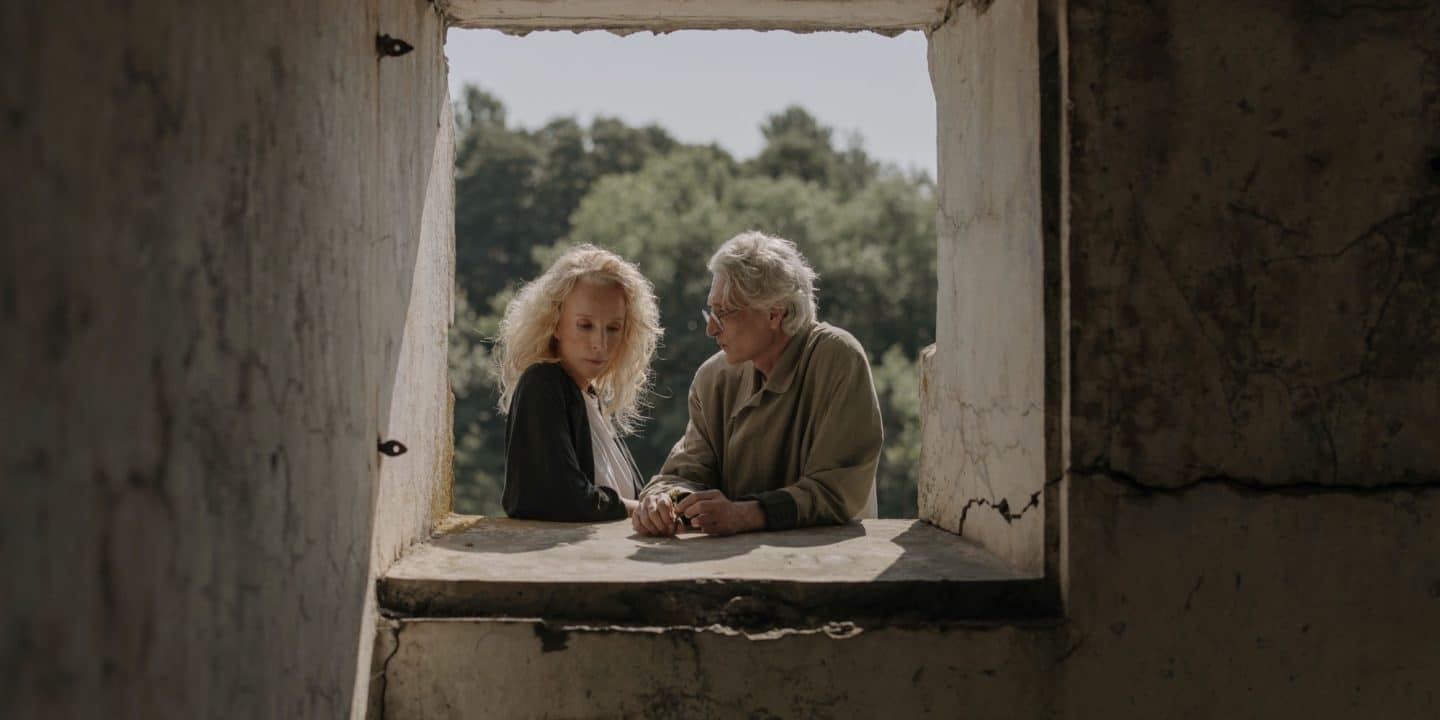

When Parenthood Comes Before the Couple
Exploring the desire for family, the bonds of parenthood and the relationship between two adults.You complete this worksheet in your browser, without an account and without giving your name. Your answers and selections are not sent to Online Therapy Clinic, are not passed to a therapist and are not saved anywhere — not in cookies, not in your browser’s storage and not on a server.
They exist only while this page stays open: if you close, refresh or leave it, they are gone. To keep a record, use “Copy my reflection” and paste the text wherever you choose. Like any web page, this one loads its fonts and images from external servers, but nothing you write or select is included in those requests.
If you and your partner both wish to complete the worksheet, each of you can do so separately, on your own device, and decide freely what — if anything — you would like to share.
We often assume that a couple begins with romance and that a family follows. For many couples that is how it happens. But sometimes the wish to create a family is itself the main force that brings two people together, and parenthood begins before the partners have fully discovered one another as a couple.
A relationship that starts this way can become deeply organised around a shared family project — and work well. Years later, perhaps as children grow more independent or family life changes shape, the partners may notice that the relationship between them as two adults has never really had the chance to develop on its own terms. The question then may be less about recovering something that has been lost, and more about discovering something that has not yet had room to grow.
This worksheet is not about restoring romance, repairing a marriage or deciding whether to stay together. Romance is not treated here as superior to companionship, shared commitment or other forms of lasting attachment. It is an invitation to think about how your relationship came into being, what the family project has meant to you and how things may be changing. You can skip any question, pause, or stop at any point. There are no right answers.
Allow around 20 to 30 minutes. There is no need to complete it in one sitting; because nothing is saved, simply copy what you have written before closing the page if you would like to return to it.
This reflection assumes that each partner can think and speak freely. It is not a way of resolving a situation marked by intimidation, coercion, control or fear. If you do not feel safe in your relationship, your safety and appropriate professional support come before any shared reflection — and you need not discuss your answers with your partner.
Looking back over the history of a relationship can stir strong feelings: you can take a break, skip a question or stop altogether. If you are in danger, are having thoughts of harming yourself or do not feel safe, contact the emergency services straight away (999 or 112 in the UK; 112 across the EU) or a helpline in your country.
If you are concerned that someone might see your answers, use “Clear my responses”, at the bottom of the worksheet, before leaving the page.
Return, if you can, to the beginning of your relationship. People are drawn to one another for many reasons: to the person themselves, and also to the future a relationship seems to make possible. These two kinds of attraction often sit side by side, and neither is more genuine than the other. The aim here is curiosity about how things began, not a judgement made with hindsight.
You might think of a quality, a way of being with you, a conversation, a place or a period of time — however brief.
There is no right proportion. It may have been central, peripheral, or something you only recognise now.
The accompanying clinical reflection returns to the image of a couple as a vessel and asks whether its engine is always romantic attraction — or whether, for some couples, it is the wish to create a family. Read the clinical reflection →
The wish for a family is rarely only about children. It can carry hopes, memories and meanings that are not fully conscious, and that may have their roots in the family we grew up in. Two partners can share the same wish to create a family while attaching quite different personal meanings to it. This section is about your own meanings, as far as you can sense them.
Tick as many as feel relevant, or none. These are not categories to fit into, only possible starting points.
It may have been both: wishing to keep some things and to leave others behind.
This is not about guessing correctly. It is simply a chance to notice what you assume, and how much you actually know.
The accompanying clinical reflection explores how two people may share a wish to create a family while attaching different personal meanings to that desire. Read the clinical reflection →
When parenthood arrives early in a relationship, partners may learn to cooperate before they have had much chance to disagree, to play, or to explore intimacy together. A different order of development is not a lesser one: many couples build deep trust through shared responsibility. It can still be useful to notice what grew, and what was given less room.
Partners often remember the same years quite differently, and both memories can be true. You are describing your own experience, not settling what “really” happened.
Looking back, what do I think we understood well about one another, and what remained less explored?
The second column is not a list of failings. Something unexplored may simply be something that has not yet had its moment.
In the companion podcast, a fictional couple, Adam and Alice, look back on the early years of parenthood and find that they remember them quite differently. YouTubeSpotifyApple Podcasts
Within one relationship there may be two bonds. The parental bond rests on shared responsibility, care and the achievements of family life. The bond between two adults involves knowing and being known as a person, beyond the roles you share. These bonds can support one another, but they are not interchangeable: a couple may be a strong parenting team and feel less certain of one another as adults, or the reverse.
How do I experience my partner within each of these bonds?
There is no need for the two columns to balance. Write as much or as little as feels true in each.
In what ways do I experience my partner as someone with whom I share the responsibilities and achievements of family life?
How do I experience my partner as an individual, beyond their parental role?
Optional. Tick any that apply. Not every relationship includes, or needs, an active sexual dimension; these are possibilities, not expectations.
The clinical reflection distinguishes the parental bond, built on shared responsibility and care, from the bond between two adults, and considers what it means to recognise a partner as having an inner world of their own. Read the clinical reflection →
Family life does not stay still. Children grow and become more independent, responsibilities shift, work and circumstances change. When the shared project that organised a relationship changes shape — or has, in many ways, succeeded — differences between partners that were held in place by busy family life may become more visible. This can be unsettling, but it is not necessarily a crisis; it may be a transition.
Tick anything that applies. Your situation may not be listed here.
Differences are not necessarily problems. You might also note any mixed feelings: relief, loss, curiosity, unease — sometimes all at once.
The article suggests that the shared arrangements which steady a family can also leave differences unexamined — and that when those arrangements change, what emerges may be a transition rather than a crisis. Read the clinical reflection →
This final section asks for no decision and no conclusion. It invites curiosity: looking at your partner, and at the relationship, as something not fully known and still developing. Some couples discover renewed intimacy, some a deep friendship, and some find that they want different things. None of these outcomes can be prescribed in advance, and none is asked of you here.
You might also notice whether curiosity feels easy, difficult or not quite possible at the moment. Each of these is worth knowing.
Optional. Choose the description closest to how you feel, or leave this blank.
You do not need to share any of your answers. Some things may need to be understood privately before they can be spoken about — and some may stay private. If sharing would not feel safe, please leave the first box empty.
If you prefer to listen, the clinical reflection that accompanies this worksheet is also available as an audio narration. Listen to the narration →
This summary is put together on your device, from your own words. It does not interpret them, and nothing is sent anywhere. It updates as you write.
Your reflection will appear here as you complete the worksheet.
Your answers are held on this page only. If you close, refresh or leave it, they will be lost. To keep them, use “Copy my reflection” and paste the text into a document, note or message of your choice.
About this worksheet
This worksheet is designed to support personal reflection, on your own or between psychotherapy sessions. It is not a test, a relationship assessment or a substitute for professional assessment, and there are no right answers. It does not try to tell you what to do about your relationship or to evaluate it; it simply makes room for your own experience of it.
When difficulties persist
Some relationship difficulties ease with time; others continue to weigh on mood, sleep, work or family life. If you notice lasting distress, anxiety or difficulty coping with everyday life, please consider speaking to your GP or another qualified professional.
BetterHelp clients: copy your reflection and paste it into your BetterHelp therapy messages, rather than sharing personal information through this website.
Your confidentiality
This worksheet does not ask for your name, email address or contact details. Your reflections stay in your browser while you use the worksheet. They are not saved, are not sent to Online Therapy Clinic and are not shared automatically with a therapist. They disappear when you leave the page. You decide whether to copy your reflection, and whether to share it with anyone.
If you are using a shared or public device, remember to clear your responses when you have finished.
A relationship that began with a shared project may still be discovering what else it can become.
© Ari Sotiriou MA PGDip | UKCP Accredited | enquiries@online-therapy-clinic.com
This worksheet is intended for personal reflection and does not constitute clinical advice.